Why Does My Cat Stare At Me? Unraveling Their Gaze
Those Intense Gazes: Unraveling Why Your Cat Stares at You
Table of Contents
- 1 Those Intense Gazes: Unraveling Why Your Cat Stares at You
- 2 The Staring Game: Understanding Feline Communication Through Gazing
- 3 Many Eyes, Many Messages: Decoding the Meanings Behind a Cat’s Stare
- 3.1 A cat’s stare can mean:
- 3.2 Eyes of Affection: When Their Gaze Means Love
- 3.3 The Inquisitive Look: Interest and Attention-Seeking
- 3.4 Food Focus: Is That Stare About Snacks?
- 3.5 Ready to Rumble: Staring as a Prelude to Play
- 3.6 Guardian Gaze: Why Cats Watch Over You While You Sleep
- 3.7 Purring and Piercing: Contentment or Something More?
- 3.8 Pupil Power: Big Eyes, Big Emotions (Excitement or Fear?)
- 4 Beyond the Eyes: Deciphering the Stare with Body Language
- 5 When to Worry: Staring as a Sign of Health or Behavior Issues
- 6 Responding to the Look: What to Do When Your Cat Stares
- 7 Conclusion: Appreciating the Enigma of the Feline Stare
If you’re a cat owner, you’ve likely experienced that intense, prolonged stare from your feline friend. It’s a moment that often leaves us wondering, ‘Why is my cat staring at me?’ The enigmatic ways of cats always keep us guessing.
Cats, with their enigmatic ways, often leave us pondering their behavior. They may stare at you while you are asleep, while you are eating, even while you are just sitting on the couch. For instance, your cat might stare at you while you’re eating because they’re curious about the food you’re having, or they might stare at you while you’re sleeping because they’re keeping a watchful eye over you. This mystery of their behavior keeps us engaged and intrigued.
But what does that stare mean? Is it affection or curiosity or something different?
This article will delve into feline behavior, drawing on scientific research and expert opinions to help us determine why your cat stares at you. We will discuss the different possibilities and give you some understanding to help you comprehend your furry friend.
So, if you have ever thought,” Why is my cat staring at me?” keep reading. You might be surprised at the answers.
The Staring Game: Understanding Feline Communication Through Gazing
With their independent spirits and captivating social dynamics, cats often leave us scratching our heads in wonder. Their enigmatic behaviors, particularly that intense gaze known as staring, only deepen the intrigue. What’s going on in those curious minds? This seemingly puzzling habit is, in fact, a vital way for our feline friends to communicate. Understanding this aspect of their behavior unravels another layer of the delightful mystery: cat companionship.
In the animal world, direct eye contact usually conveys a strong message. With cats, a stare can mean a multitude of things. Staring is not simply a jumbled collection of random acts they do; it is a means by which they connect and communicate with us.
Unlike dogs, cats do not usually engage in staring as a means of bonding, but those rare moments they stare at you suggest they trust you. It’s a silent declaration that says, “I feel safe and secure with you.” This trust indicates how much your cat values and appreciates your presence.
Feline behaviorists even suggest that a cat’s stare may be incorporated into observing you. Cats are naturally curious creatures. So they may be teeming with various things they inspect or even discover.
Considering the context when interpreting the meanings of staring at a cat is crucial, as all the visual information is communicated simultaneously. By understanding the context, you can decipher what your cat may be trying to communicate through its stare. This knowledge and competence in understanding your cat’s behavior can make you feel more connected to your pet.
Many Eyes, Many Messages: Decoding the Meanings Behind a Cat’s Stare
A cat’s stare can mean a variety of things. Each stare is another clue to understanding the behavior of felines. You can continue strengthening your relationship with your cat by understanding these meanings.
The first meaning of the stare is affection. Your cat’s gaze can be seen as love and safety.
A cat’s stare can also indicate curiosity. A cat will usually show signs of interest in you or what you are doing if their stare lasts for some time.
Another meaning is related to hunger. If your cat is staring at you or your food, it may signal that it is time to feed.
A stare can also be playful. A cat will often stare and lock eyes with you before pouncing on you or their prey.
Also, cats will stare at you while you sleep. This could mean they are curious or looking out for you.
Purring and staring usually means your cat is content and happy. It likely means they feel relaxed and comfortable.
If a cat is staring at you with pupils enlarged, you might see excitement and/or fear, which can be common indications.
Cats hunt with their eyes and may simply be honing their instinct.
A cat’s stare can mean:
- affection and comfort
- curiosity
- food
- playfulness
- protection
- contentment as they purr
- excitement and/or fear as indicated by large pupils
- hunting instinct
By recognizing these clues, you can decipher your feline friend’s stare. This understanding will help you respond appropriately by offering food if hungry, engaging in play if they feel playful, and strengthening your bond with your pet. It’s a delightful journey of understanding and connection.
Eyes of Affection: When Their Gaze Means Love
A loving stare can be your cat’s form of affection. When your cat stares at you softly, it may tell you it cares about you. This is often accompanied by slow blinks, which some cat behaviorists call ‘kitty kisses’ – a sign of trust and affection.
It is a sign of trust. Your pet is telling you they are comfortable and feel safe around you. It is their peaceful way of sharing a moment. A soft stare is a sign of affection and typically a positive sign. Cats are not normally staring at you to stare; they express that they care for you. It’s a heartwarming feeling of being appreciated and loved.
The Inquisitive Look: Interest and Attention-Seeking
Cats have an instinctive curiosity. They can interpret the look a cat gives you as exploring the environment around them. Often, you are the source of their exploration, and they constantly stare at you as if you are the greatest discovery.
Cats will also stare when they want your attention. Cats can want to interact. Their look may be an invitation for you to engage with them.
At times, a cat may stare at novel objects or moving things. Their stare can be a form of learning. Staring is just a glimpse into a world of continual exploration.
Food Focus: Is That Stare About Snacks?
A cat’s stare could mean it is time to feed. Cats are adept at learning to stare, which means a reaction. This could mean feeding time.
Cats are always looking to get their way. They can be very persuasive with their stare. Meal times will often be ushered in with a stare. Your pet may also remind you of dinner.
Ready to Rumble: Staring as a Prelude to Play
Cat staring can be a sign of playfulness. Before they pounce playfully, your cat may lock eyes with you. You may even see their pupils dilate as they gear up to pounce on their prey. This indicates they are a ball of fun and full of playfulness. It’s a delightful sight that never fails to entertain and amuse.
Cats also tend to follow their stare up with playful postures. You should look for their playful postures as indicative of fun. They want you to play based on their eye position and stare at you.
Cats want to play with you and express this desire through visual language. Their stare is an invitation to play.
Guardian Gaze: Why Cats Watch Over You While You Sleep
Cats will often observe their people while they sleep. While this may seem strange, there can be straightforward explanations for it. They may feel protective and look out for you.
Cats are crepuscular and generally most active at sunrise and sunset. While you are sleeping, they are observing you awake. While they may be sleeping, cats might be curious about your habits, whether you are awake or asleep.
The protective monitoring is not dangerous and means they are bonded to you. Your cat is double-checking that everything is alright.
Purring and Piercing: Contentment or Something More?
A cat that jumps on your lap and begins to purr while staring at you is typically happy. This behavior is the combination of a sign they are content. Purring brings a level of meaning to their stare.
Contentment usually accompanies these behaviors. Generally, when your cat is looking for affection, it is at ease. The fact that it combines both behaviors indicates that being in your company is enjoyable.
Rest assured, if your cat is staring and purring, your home life is likely going well!
Pupil Power: Big Eyes, Big Emotions (Excitement or Fear?)
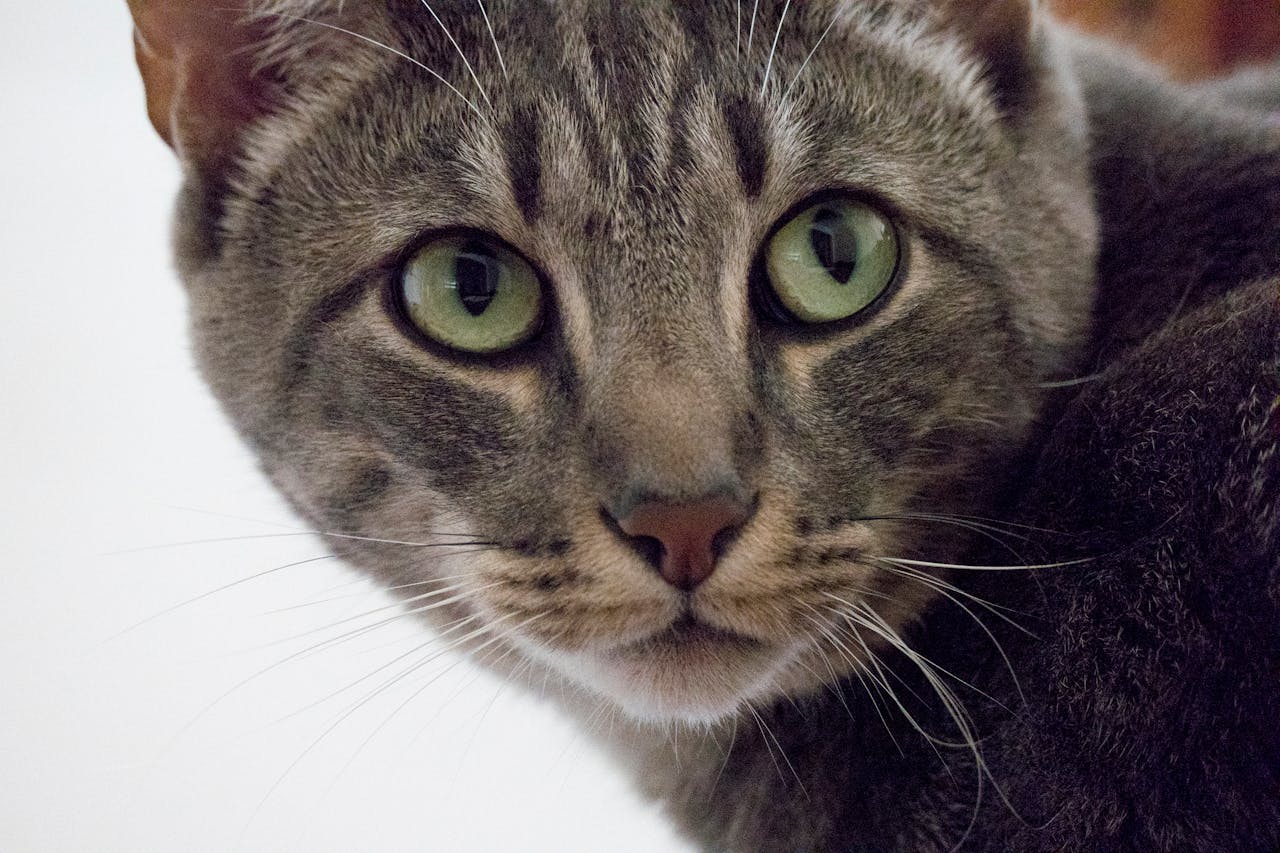
Dilated pupils can give a window into your cat’s feelings. If your cat is staring at something with dilated pupils, that may be excitement or fear, or quite simply, it is their emotional response.
This visual cue can inform your response. Large pupils during play mean they are participating in the play. However, if they are in a stressful situation, that could indicate fear.
Of course, the context matters, as does examining their body language in conjunction with this cue to gain more insight into their emotional feelings.
Beyond the Eyes: Deciphering the Stare with Body Language
Interpreting a cat’s stare means looking at it in context with body language. Cats communicate with much more than their eyes. Everything about their body can tell you their current mindset.
You should look for the subtleties. You can see changes in posture from lying down to standing upright and from relaxed to tense. A relaxed cat will have soft muscles and a calm posture. To be tense gives the opposite impression.
The tail of a cat also says a lot. Its position can indicate excitement, terror, or happiness. You should watch how the tail moves and where it is positioned.
The ears tell you more information. If they are held forward, the cat is interested or playful. If the ears are flat, the cat is either uncomfortable or aggressive.
Whiskers can also indicate a cat’s state of being. When the whiskers are held out in front, the cat is curious and/or excited; when the whiskers are pulled back, the cat might feel threatened or afraid.
When a cat stares, its sounds can also offer information. Cats make many sounds, including meowing, purring, and hissing, and all of these are part of interpreting the cat’s emotional condition at that moment in time.
Cats sometimes use a combination of body parts and sounds to give you information, and each component of that information is a piece of the puzzle that could help you interpret the stare and the cat’s emotional state.
All of these descriptors must be considered when interpreting a stare. After observing a stare, reading your cat’s body language can greatly improve your reactions and interactions.
The Tail’s Tale: What It Communicates
A cat’s tail can say a lot. An upward-facing tail indicates the cat is friendly, content, and confident.
A bushy tail means they are scared or excited. A tail from side to side could mean they are annoyed or irritated. You have to consider the tail position when trying to understand a stare.
Ears and Whiskers: Reading the Subtle Signals
Forward-facing ears indicate curiosity or interest. They may be focused on a sound or an object.
Whiskers can also show mood. In a relaxed state, whiskers are parallel to the body, while whiskers in the forward position can indicate interest or excitement.
Talking Through Gazing: Vocalizations and Staring
Vocalizations that accompany stares give context. Purring, in almost all cases, means the cat is comfy and happy. Hissing or growling, on the other hand, means threat or stress. The sounds of vocalizations paired with a cat’s stare can help translate their intent.
Standing Tall: Posture and What It Suggests
A relaxed position could be a sign of comfort and joy. Your cat may feel safe.
A tense body may indicate suspicion or anxiety. Raised fur or muscle tension can often signify stress or aggression. If you notice these signals, you can improve your and your cat’s communication.
When to Worry: Staring as a Sign of Health or Behavior Issues
If you notice your cat staring occasionally, it may reflect some underlying problems. You need to recognize when staring becomes abnormal. Staring behavior may be modified for other reasons and symbolize a healthcare problem. For instance, visual issues could cause strange behavior. Watch for signs from your cat, such as whether they bump into things.
Pain or discomfort are potential reasons for staring behavior. If your cat is engaging in staring more than usual, think about a check-up with your veterinarian. Staring can also undergo sudden increases that may require a veterinarian’s evaluation. Furthermore, to help support your cat’s joint and mobility, you should look into joint supplements (many cat owners report positive results with brands providing good offers). If you seek savings, check a Yumove discount code for a great price on essential supplements.
Behavioral changes may be another clue. If a cat becomes withdrawn or more aggressive, which is abnormal to their usual personality, it could also indicate your cat is anxious or stressed. Chronic stress can alter a cat’s health.
Illnesses or conditions such as hyperthyroidism or chronic pain may provoke unusual staring. Hyperthyroid cats may also exhibit excess activity and appetite. A thorough exam and follow-up care by your veterinarian will help identify or monitor these conditions.
It is important to consider the context of your cat’s stare. Monitoring your cat’s general behavior allows you to differentiate between normal and abnormal behavior. Reading and understanding these signals from your cat can help ensure it remains happy and healthy.
Responding to the Look: What to Do When Your Cat Stares
How you respond when your cat stares at you can enhance your relationship,花 or make you feel more distant. When your cat stares at you, consider what the staring is about. You should respond in a way that matches the signals they offer you.
If they appear curious, please correspond with them. Use a calm voice or a toy to pique their interest. Playtime can strengthen your already-established connection with your cat.
Above all, be careful not to react aggressively in this situation. It can be a stressful event in its own right, and you don’t want to add to it with more chaos. Maintain calmness and friendliness when responding to your cat’s eye gaze.
When your cat stares at you and seems anxious or uncomfortable, reassure it if possible. Your lap or a familiar toy can provide safety. You may also offer gentle petting, minimizing your cat’s stress levels.
Take note of the events and conditions in your environment and your cat’s future routines. Many events and conditions can cause cats to stare more frequently and intensely. Ensure your cat has established a predictable and secure environment.
Ultimately, you should observe. Try to visualize the possibilities around the staring feline you have before you. This can strengthen your bond and help you get to know your cat’s style to some degree like you do when building a trusting relationship with people.
Your complete recollection of each cat’s behaviors and great attention to detail will contribute to a happy, healthy cat.
Eye Contact Etiquette: The Do’s and Don’ts
Do make slower, soft eyes. This is a non-threatening gesture. Slowly blinking your eyes is similar to “kitten kisses.”
Don’t stare at your cat’s eyes directly for too long. This could come off as aggressive. Cats view prolonged direct eye contact as a challenge.
Monitor for comfort signals. A cat with calm eyes is relaxed. If that is the case, your response can be playful and affectionate.
Don’t ignore your cat if it starts communicating. This could be a quiet request for interaction. By responding appropriately, you will encourage the cat’s trust level.
Engaging Your Gazer: Play and Affection
Playtime is a great way to respond to a staring cat and provides an outlet for its energy. Some toys that simulate prey should also be introduced to keep them interested.
Affection is equally important. When your cat wants a cuddle or attention, pet or cuddle with them, cats will generally bond with you by staring!
It is helpful to rotate toys so that your cat doesn’t get bored with playtime. Explore interactive play in ways that stimulate them, such as games of fetch and laser-point toys.
Try to maintain a refreshing and enjoyable experience in playtime; cats typically enjoy this.
Watch for their mood throughout playtime. Often, a cat may become uninterested in playing and want to stop playtime and take a quiet break.
Building Security: Providing Reassurance and Trust
Cats may stare at times of insecurity to seek reassurance. A reassuring pet or soft voice can alleviate their insecurity.
Create a safe environment so that trust can be built. Provide a quiet, safe, and secluded area. Things like familiar or loving smells, like a favorite blanket, will comfort you.
Routine is a significant trust builder! Routine feeding time and consistent intervention build trust. Cats appreciate the predictable.
Be patient in color, responding to their emotional cues. Respond calmly to all of their behaviors. Trust takes time, but your consistent nurturing will foster it.
Conclusion: Appreciating the Enigma of the Feline Stare
Cats have a highly nuanced and well-developed communication style with one another. This silent communication style includes cats’ gazes; they give us a better glimpse into their world each time they stare. Although the reasons for staring may differ occasionally, staring is generally a sign of trust. Understanding the types of stares your cat gives you is a great starting point for learning how to support your cat’s needs and advance your relationship with them.
Our cats’ behaviors tell us a lot about what they experience daily. Once we figure out the stare, we can continue progressing and forming bonds with our cats, allowing our lives to become intertwined.
Although cats can be mysterious in their gazes, gazing is something we should celebrate. Once we accept the mystery, we can continue to learn more about the fascinating creatures we share our lives with.
Understanding Leads to a Stronger Bond
Knowing what your cat is communicating with their eyes and gaze helps deepen our relationships, causing us to take on all necessary roles to help our cat’s hopes and dreams. It invites meaningful connections that help you better understand trust and security.
Every interaction is an opportunity for connection. Knowing what their world is all about creates joy for everyone. It makes every moment spent gazing into your cat an opportunity for love.
Celebrating Your Unique Connection
Enjoy these moments of interaction with your cat that do not involve words. The cat’s stare is a form of “communication” because it checks in with you and acknowledges your connection through its bodily posture and gaze.
Enjoy the uniqueness of every stare. Each stare, both your cat’s and yours, uniquely represents your cat’s being and character. Nurturing and growing these areas nurtures and grows your connection with your cat.
Remember also to educate yourself on other nonverbal communication your cat displays. Educating yourself on your cat’s stare enriches how you grow with your cat because you have your unique connection.
Please do share this experience with your fellow cat lovers. Join forums, groups, and clubs that allow you to share stories.
Revel in the whole experience of connecting with others through their (or your) cat’s stare.